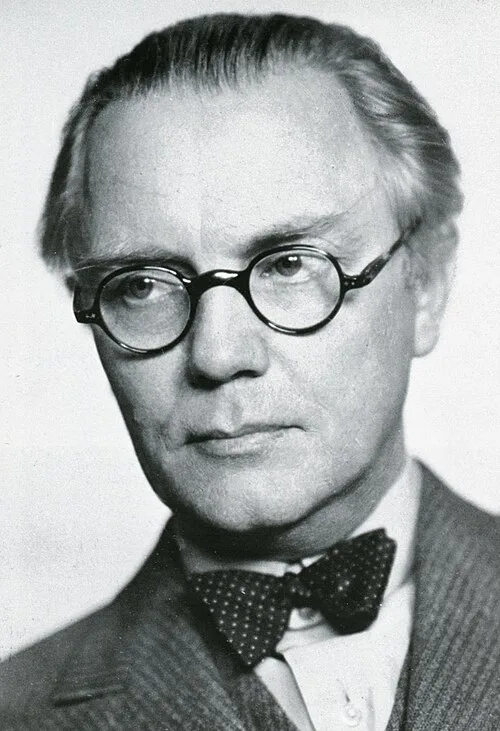
Gunnar Asplund
The visionary behind Swedish Grace. The master architect whose bold vision and refined sensibility shaped the very essence of Swedish Grace. Asplund’s iconic creations-most notably the Stockholm Public Library and the Skandia Cinema-embody a seamless blend of classicism and modernism, transforming everyday spaces into timeless works of art. His pioneering spirit and dedication to beauty, function and place continues to inspire all who seek the soul of Scandinavian design.
Gunnar Asplund (1885–1940) stands as one of Sweden’s most influential architects, renowned for guiding the transition from National Romanticism and Nordic Classicism to modernism in the early 20th century. Educated at the Royal Institute of Technology and deeply inspired by his travels across Europe, Asplund’s work is celebrated for its clarity, humanism, and sense of place. From the luminous rotunda of the Stockholm Public Library-an icon of the Swedish Grace movement-to the tranquil landscapes of Skogskyrkogården, a UNESCO World Heritage site, Asplund’s legacy is woven into the fabric of Swedish culture and design. His architecture invites the curious explorer to experience spaces where history, innovation, and artistry meet.
A prominent architect who contributed to furnishing the Swedish Pavilion at the 1925 Paris Exhibition. His designs emphasized simplicity and functionality while maintaining a strong aesthetic appeal. He’s also known for his famous Senna armchair.
Explore Asplund’s legacy in: “Gunnar Asplund’s Gothenburg: The Transformation of Public Architecture in Interwar Europe” by Nicholas Adams.